 |
||||
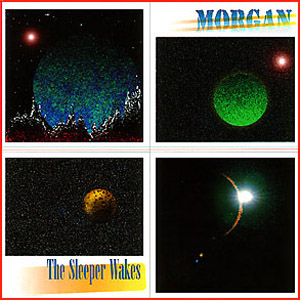
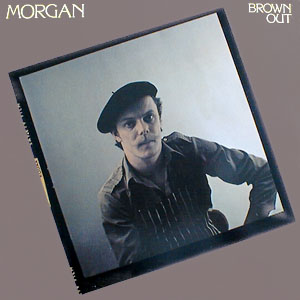
| Covers shown: LP 1978, CD 1999, LP 1976 (& CD 2011) | ||||
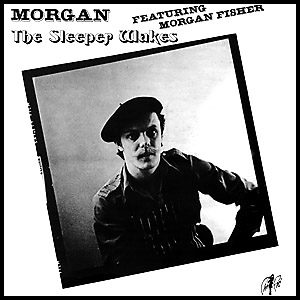 |
THE SLEEPER WAKES a.k.a. BROWN OUT (1976) ••• click here to buy from amazon usa ••• click here to buy from amazon uk ••• click here to buy from amazon japan Morgan band album recorded in 1973 1. Fire In The Head From: http://www.rollingstone.com Several more listener reviews can be found here, including a nice one in Russian for our comrades: |
|||
 |
||||
 |
||||
| Morgan’s sleeve notes for the Angel Air CD: The Story of This Album (a little insalata mista…) This is the second and last album by the band I and Maurice Bacon formed in 1971, in an effort to head down yet another turn in a musical road we had been pursuing together since 1966 in a band that went through various permutations. The Soul Survivors (a pretty good semi-pro soul band) became The Love Affair (the hit pop band whose singer Steve Ellis left when he realised that the soul had gone and pop had taken over) and later L.A. (the prog version of the previous band, with a new singer). L.A. failed in terms of sales because our largely pop audience couldn’t understand what the hell we were up to, playing in 5/4 and so on. We tried to return to our pop formula and win back the fans but frankly our hearts weren’t in it. It was time for a new band. In retrospect I think Love Affair was a pretty respectable pop band, and if sales are a measure of quality, we didn’t do badly as “Everlasting Love” was a #1 hit in 1968, speedily followed by several more top ten hits. We were given a little integrity years later when U2 covered “Everlasting Love” as one of their B-sides Why is the second Morgan album being reissued first? Well, we are still looking for the master tapes of the first album, “Nova Solis”, which perhaps lies buried somewhere in the vaults of RCA Rome, but nobody has found it yet. A team of archaeologists is working on it… In 1973 when we made this album, the best recording technology was at a lower level than it is in the average drum’n’bass bedroom studio in 1999. However, we were fortunate in that RCA Studios in Rome were the best that could be found at the time. Most studios were 8-track in those days, but RCA boasted no less than four state-of-the-art 16-track studios in one building – two band-sized studios, one for orchestras, and, being Italy, a massive studio for operas. It was there that maestro Nino Rota recorded his inimitable music for Fellini’s movies. Because of that, the studio store room was brimming over with rare and unusual instruments, many of which were used in the making of this album. I was stunned and delighted to find they had a 1930 Neo-Bechstein electric grand piano, probably the first ever electric piano, and its ethereal harp-like tone is featured here and there on this album. I also got my hands on the world’s largest marimba and celeste, and a variety of timpani, tubular bells, early string synthesisers, etc., made their way into our music. How did our music evolve? Well, since my school kid days I had listened to every kind of contemporary classical music avidly, from the delicate shades of Debussy and Satie to the outer reaches of Stockhausen and Varese. In 1966 I had the enormous good fortune to see Jimi Hendrix doing his first gigs in London pubs, like a visitor from another planet. Soon after, the whole prog rock scene exploded and bands like Yes and The Nice appeared at The Marquee Club (I remember seeing Jon Anderson hauling crates of Coke into the Marquee bar before going on stage, to supplement the non-existent wages he was making from music). King Crimson and Pink Floyd finished off anyone who was resisting having their minds blown, and lesser bands with names like Gnidrolog showed us the seemingly infinite ways in which the boundaries of rock could be expanded – all with the help of the kind uncle of us all, John Peel. When the busy time that Maurice and I had been having with Love Affair finally ground to a halt in the working men’s clubs of Scunthorpe and beyond, we decided it was time to let rip the music that all the above-mentioned bands had inspired in us, and Morgan was born. (No-one who has not been in a band can ever understand the hell one goes through when choosing a band name, so we decided to keep it simple. I hope it was not considered an ego-trip on my part – still, I did write most of the music). At that time, EMS (Electronic Music Studios) in London had just made the first British synthesiser, the VCS3 (also charmingly named The Putney, which is where EMS was located). Not only was this a versatile instrument when connected to a keyboard, it could also produce all kinds of extraordinary sounds on its own, and it was also able to radically modify the sound of any instrument (or voice) fed into it via a microphone or cable. It was used to great effect by King Crimson, in particular on the track “Happy Families”, where the voice was fed into it to create a robotic tone that had never been heard before in rock. I snapped up one of these wonderful devices as soon as I could, and it was to have a great influence on the overall sound of the band. Like all synths at the time, it had no program memory, so during our live shows I had to frantically reprogram the whole instrument between songs, using headphones. A well-timed bass intro, an extended drum break, or a solo song by Tim with his acoustic guitar helped enormously! At some of our outdoor festival gigs, if the voltage went up and down, so did the pitch of the VCS3 (it is after all a Voltage Controlled Synthesiser), which made life interesting. Incredibly, nearly 30 years on, these instruments are still in production and are featured on many recent ambient/techno records. Our bass player Bob Sapsed was an old friend and thoroughly likeable fun-loving guy who was at the time playing in his own band, Springfield park. Bob had played from time to time with me and Maurice in Love Affair, on which occasions a good time was had by all, so he was recruited post-haste. Sensing that we were headed for more experimental territory than the rock bands in which he had been honing his licks, Bob went out immediately and bought a fretless bass, on which he performed brilliantly, his melodic lines and slides adding immeasurably to the texture of the music we would make together. Like every band who needed to find new members, we placed an ad in Melody Maker, and a variety of interesting hopefuls came by and jammed with us in our rather unusual rehearsal studio, a north London handbag warehouse owned by Maurice’s father (and the band’s manager) Sid. It was actually Sid’s connection with Italian handbag manufacturers that got us the deal with RCA Italy. It was a better deal than any of the UK record companies offered us. Italy was gung-ho for progressive rock in those days (Premiata Forneria Marconi were going great guns at the time) so we looked forward to working there. The three of us who then comprised Morgan were still feeling our way musically and were hoping for a member who could bring more creativity into the band, rather than just play or sing what he was told. One man who stays in my memory was the excellent sax player from King Crimson, Ian McDonald. Sid brought him down to the warehouse, we had a memorable jam session together but in the end Ian decided to go his own way and produced his wonderful McDonald-Giles album. One fine day a charming and slightly nervous chap walked in, sat down with an acoustic guitar, and sang some of the most haunting and beautiful songs I had ever heard, with lyrics that conjured up ancient legends, distant planets and surrealistic films. His high pure tenor voice had exactly the quality I was hoping for. Tim was in, and Morgan was ready to get cracking. Just prior to this, Tim was the singer/bassist/co-composer in a band called Smile, which featured a couple of lads by the name of Brian May and Roger Taylor , who did quite well later. In the early Morgan days when we played a monthly spot at the Marquee, Brian was often in the audience, and his obvious appreciation of our efforts was most welcome. Tim contributed several magnificent songs to the first Morgan album "Nova Solis". By the time we made this album our modus operandus was that I would compose the music at home, write arrangements which would be honed into shape with the band, and Tim would take a rehearsal tape home and add his lyrics. I am still amazed how he ever managed to hang his well-constructed lyrics onto my often very angular and difficult melody lines, but he did it with flying colours – well done lad! I’d also like to thank the band for navigating fearlessly through my scores, many of which seemed to have a different bar length every other bar. At that time in Italy, studios were manned by men in white lab coats who refused to allow the musicians to touch the mixing console or anything else in the studio. We broke that rule the first day, and after a lot of shouting, waving of hands and slapping of foreheads (their own) the eminently likeable staff allowed us to have a hand in sculpting the sound of our own album. Another rule was that every band had to have not only a producer but a “musical assistant”, whose job, it seemed, was to make sure we played in tune and in time – bloody cheek! But actually “Foffo” was a thoroughly nice guy and helped us a great deal, as did Gianni the producer, Rodolfo the engineer and his assistant Paolo. Studio hours were fixed – union rules, lads! So we started at 2pm on the dot, broke for supper at 7, back in at 8 and finished at midnight. At the same time as the recording of this album I was making my solo album “Ivories”, from 9am to noon. During mealtimes, the studio was locked – can’t leave those long-haired Inglese in there on their own! Also, Rodolfo was the shop steward, so lunchtimes were often extended for an hour or two for a union meeting, brothers. Still, lunchtimes in Italy are not to be sniffed at. Two hours minimum, with all the wine you can drink and enough pasta to sink a gondola. The RCA studio was part of a massive modern complex a few miles outside of Rome, which included the factory, the offices, design studios, etc., etc. – the whole RCA shebang in one modern complex looking just like a Hollywood film lot. We ate in their vast canteen together with the entire staff of RCA, from the humblest cleaning lady to the presidente, which was heartwarming. We were billeted in a dark, dreary, anonymous little hotel on the side of the humungous Via Tiburtina that ran from Rome out west towards the mountains past RCA. In the next room from ours were two even darker and drearier Germans, Kurt and Werner from the local rubber factory, who soon became our drinking buddies, and their names are now immortalised on this recording. Being practically lira-less at the time we would, on days off, head for Rome station to gawk at the Italian beauties who seemed far beyond our reach, and eat the cheapest pizza we could find (70 lire a slice with tomato sauce only – no cheese). In the late evenings after a hard day in the studio we’d hole up in our shared room, eat crisps (for some inexplicable reason, a free pink balloon came with each packet) and drink the cheapest filthy liquor we could find. Quite a contrast to the celestial music we were attempting to make during the day. Tim occupied himself playing with the balloons, “cunningly knotted and twisted into a startling array of tits and bums” on top of his wardrobe (see the sound-collage section in “The Right”). Despite our best efforts and those of RCA and our manager Sid, our first album had not exactly gone platinum. But our contract stipulated that we would make a second album (and my solo album) so with good grace RCA gave us another shot at prog stardom. A couple of events happened, though, that hammered one too many nails into our coffin. First, the album cover shoot. At some point during the making of this album we decided that the title would be “Brown Out”. Normally this phrase, as used in the USA, refers to a partial blackout of a city’s electricity supply (and in fact this album was released with this title in 1977 by Passport Records in the USA). We had our own interpretation of it, however. One by one, the four of us stood with our backs to the camera, dropped our trousers and parted our cheeks. The photographer was bemused but kept clicking away. When the proofs reached the promo office, you could hear the stunned silence all over the RCA complex. Later that week, Bob (who had managed to satisfy his taste for certain herbs even in Italy, where the police are very handy with a truncheon, cufflinks and a gun) was in a very merry and mellow mood, and decided to divest himself of all his clothing and take a stroll around the studio. The staff were vociferously indignant (more slapping of foreheads) and we were hauled up before the beak. Francesco Fanti, boss of international A & R, was an ex-foreign legion man, and in retrospect I remember him as a very hospitable and courteous gentleman of the old school. However, we as a band were under pressure and uncertain of our future, particularly yours truly as I was slaving away at my solo album as well as the band album. Unfortunately I lost my cool and bandied about the f-word (to which the response was – “but, you are a guest here!”) then broke down in prima donna tears and headed off by myself for a lonely two-hour walk along the motorway back to our digs. Our fate was pretty much sealed by that time. RCA allowed us to finish the recording but eventually, decided not to release this album, or my solo album. We felt more and more rebellious and decided not to heed at all the advice of our producers to make the music more “accessibile” (hence the words “totally inaccessible music”, also to be heard in “The Right”). Perhaps our rebellion worked for us musically, but with dire consequences commercially. I think we are all glad that we stuck to our guns, anyway, and who knows what might have happened if RCA had not withdrawn their support. Two years and one album released was not really enough for us to develop both our music and a wider following, but thanks to Angel Air, this music is once again available. The band folded following the last gig of our residency at the Marquee Club, and we all went our separate ways. Tim started to do solo gigs in folk clubs and eventually went into graphic design. Maurice eventually formed his own record label and is now in artist management. I kept my eye on the ads in Melody Maker, one of which landed me a job with Mott the Hoople and I was off to the USA within a few months. Since 1985 I’ve been resident in Japan and am enjoying making use of all the music technology that is now available. Bob went on to play with several other bands, and tragically, while still in his mid-thirties, he was killed when his motorbike ploughed into a car door carelessly opened by the occupant of a parked car. We would like to dedicate this release to Bob Sapsed, with love, respect and affection. Morgan Fisher, Tokyo, June 25, 1999. For those who think that the title of this album comes from the title of the H.G. Wells book, Tim has this to say by way of explanation: I’d read a short story by a lesser known British writer of the forties and fifties, one Cyril M. Kornbluth. In this story, the protagonist revives from a coma about a hundred years or so beyond his own time, to find himself in a society which, on the surface, appears to be a gleaming fulfilment of utopian visions of the future. On closer examination, however, this is simply a cosmetic veneer; he realises that there has, in fact, been no progress at all, neither socially or technologically; the illusion is created and fostered by the ‘ruling’ class of the time, and the ‘consuming’ class is so gullible, that they are completely unaware of it. This story was very broadly the inspiration for the lyrics of “The Sleeper Wakes”, and also “The Right”. Since the title of the Kornbluth story was “The Marching Morons”, I think most people will understand why I opted for the H.G. Wells title. Actually, it wasn’t so much that there was a direct connection, more that both stories contributed to the thematic focus of what I wanted to write. ……………………………………………………………….
(end) |
||||
